Polyethylene Fittings (Electrofusion & Injection Molded) for Agriculture Industry Applications
Table of Contents
Introduction
Polyethylene (PE) fittings, including electrofusion and injection molded types, are widely used in agricultural water conveyance and irrigation systems due to their leak-free performance, corrosion resistance, and adaptability to variable operating conditions. In agricultural infrastructure, fittings are not auxiliary accessories but pressure-bearing system components whose long-term behavior directly affects irrigation efficiency, water losses, and operational reliability.
Agricultural irrigation networks typically operate under intermittent service, frequent pressure cycling, seasonal shutdowns, and exposure to untreated water, soil, and ambient temperature variations. PE fittings are therefore specified to ensure mechanical integrity, hydraulic continuity, and durability under these demanding conditions.
Engineering Role of PE Fittings in Agricultural Systems
From an engineering perspective, polyethylene fittings are designed to maintain system continuity while accommodating pressure fluctuations, thermal expansion, ground settlement, and layout flexibility typical of agricultural installations. Their primary roles include:
- Creating secure joints between polyethylene irrigation pipelines
- Enabling changes in direction and network branching
- Connecting mains, sub-mains, and laterals
- Providing reliable interfaces between PE pipes and pumps, valves, or filters
- Supporting system modification, expansion, and repair with minimal downtime
To ensure system reliability, fittings must be selected so that joint performance is fully compatible with the pipe material grade, SDR, and pressure class.
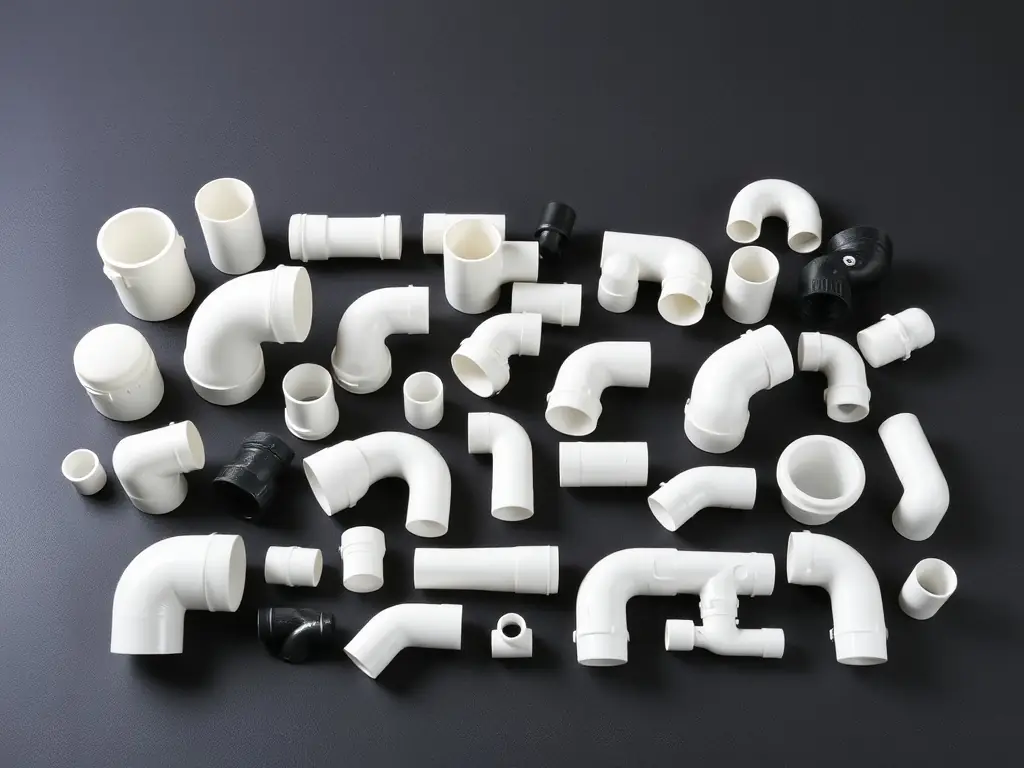
Types of Polyethylene Fittings Used in Agriculture
Comparison of Joining Methods
Parameter | Electrofusion | Injection Molded (Butt Fusion) |
Joint Type | Fully fused | Fully fused |
Pressure Integrity | Very high | Very high |
Axial Load Resistance | Fully restrained | Fully restrained |
Installation Speed | Medium | Medium |
Equipment Required | Fusion control unit | Butt fusion machine |
Suitability for Repairs | Excellent | Limited |
Typical Diameter Range | DN20–DN630 | DN63–DN1200 |
Typical Applications in Agriculture Industry
Standards and Technical Compliance
ISO 4427 / EN 12201 – Polyethylene Piping Systems for Water Supply
These standards specify requirements for PE pipes and fittings used in pressurized water systems, including material classification (PE80, PE100), pressure ratings, SDR series, dimensional tolerances, and long-term hydrostatic strength. Compliance ensures that fittings can safely operate under continuous internal pressure for a design life of at least 50 years.
ISO 13953 – Mechanical Testing of Fusion Joints
This standard defines test methods for butt fusion and electrofusion joints, including tensile strength, bending resistance, and joint integrity under mechanical loading. It verifies that fused joints are not weaker than the pipe itself.
ISO 17885 – Mechanical Fittings for Pressurized Piping Systems
ISO 17885 specifies performance requirements for mechanical fittings, including resistance to internal pressure, pull-out forces, and leakage. While primarily applicable to mechanical joints, it is often referenced in mixed irrigation systems.
ISO 11357 (OIT) – Oxidative Induction Time
This standard evaluates the oxidative stability of polyethylene compounds. Adequate OIT values indicate resistance to thermal and oxidative degradation, which is particularly important for agricultural systems exposed to sunlight and elevated temperatures.
Materials and Manufacturing
Polyethylene fittings for agricultural applications are manufactured from PE compounds specifically formulated for pressure systems and long-term outdoor use.
Material Grade Comparison
Property | PE80 | PE100 |
Minimum Required Strength (MRS) | 8.0 MPa | 10.0 MPa |
Pressure Capability | Medium | Medium to High |
Resistance to Slow Crack Growth | Good | Excellent |
Typical Applications | Secondary irrigation lines | Main and pressurized lines |
PE100 is generally preferred for modern irrigation systems due to its higher strength, improved crack resistance, and increased safety margin.
Pressure Ratings and Design Life
Polyethylene fittings used in agriculture are designed to match the pressure rating of the connected pipeline and operating conditions.
Parameter | Typical Value |
Pressure Classes | PN6, PN10, PN16, PN25 |
Reference Temperature | 20 °C |
Design Life | ≥ 50 years |
Safety Factor | According to ISO 4427 / EN 12201 |
Pressure derating must be applied for elevated water temperatures and prolonged exposure to solar radiation where pipelines are installed above ground.
Installation Principles
- Pipes and fittings shall be clean, round, and free from damage prior to joining
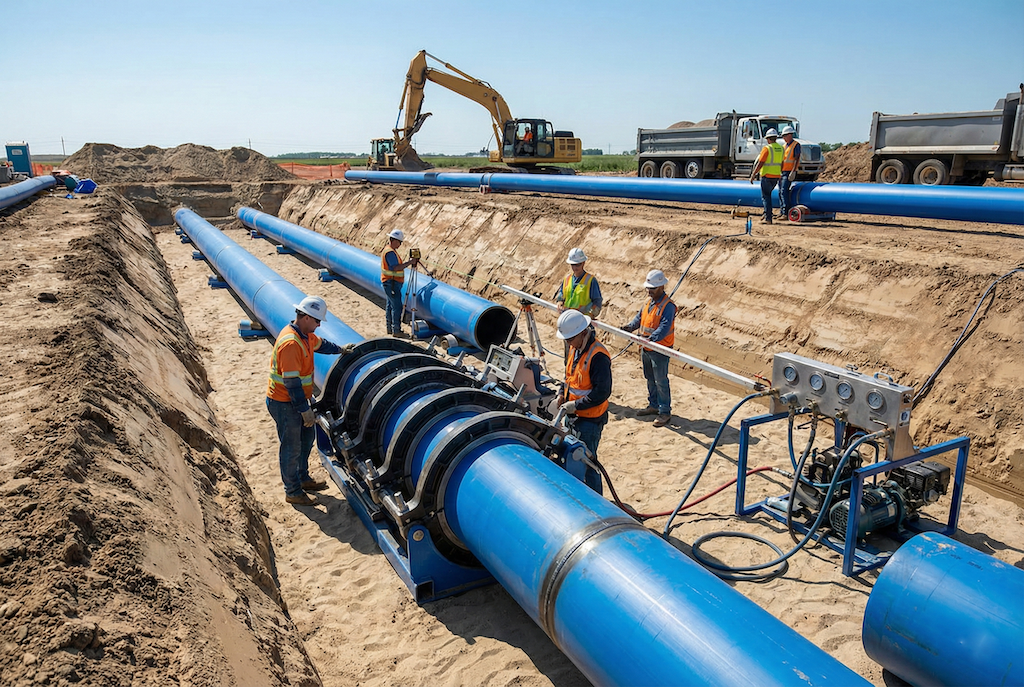
- Electrofusion joints require controlled scraping, alignment, fusion, and cooling
- Butt fusion joints require precise control of temperature, pressure, and fusion time
- Proper anchoring and thrust restraint shall be provided where required
- Irrigation systems shall be flushed and pressure-tested prior to commissioning
FAQs
Yes. When installed in accordance with fusion procedures and standards, electrofusion fittings provide fully restrained joints suitable for long-term buried agricultural applications.
PE100 offers higher minimum required strength, improved resistance to slow crack growth, and greater safety margins under pressure and cyclic loading.
ISO 13953 ensures that fusion joints can withstand tensile and bending stresses without failure, confirming that the joint is at least as strong as the pipe.
Yes. Pressure derating must be applied when operating temperatures exceed the reference temperature or when pipes are exposed to continuous sunlight.
Typical causes include improper fusion parameters, inadequate pipe preparation, lack of thrust restraint, and exposure to excessive temperature or UV radiation without protection.
Get Your Water Solutions Today
Related Water Products
Iron and Steel Valves
Polyethylene Fittings
Cast Iron and Steel Fittings